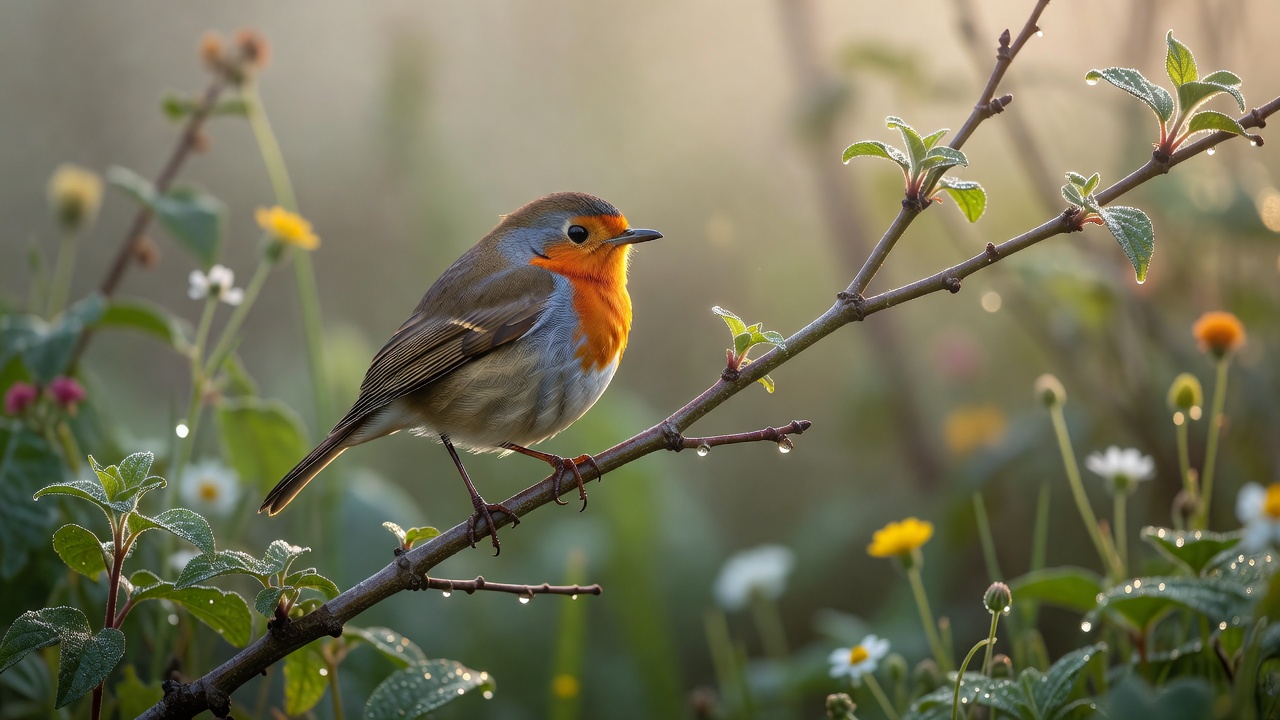
Begin with one sound rather than the whole chorus. It might be the clearest whistle, a dry clicking note or a phrase repeated from the same patch of hedge. Keep your eyes relaxed and let that sound return. The first useful question is not “Which bird?” but “What happened in that phrase?” This gives you something concrete to notice without turning a quiet morning into a test.
Give the sound four handles
Describe pace, pitch, texture and shape. Pace might be slow and separated, evenly ticking or too rapid to count. Pitch might stay level, climb or fall. Texture might seem pure, breathy, buzzy or rattling. Shape is the arrangement: a single note, a repeated pair, a long run or a short opening followed by a flourish. These are ordinary words, not measurements, and your descriptions can change as you listen again.
Try writing a phrase as marks on paper. Dots can stand for short notes; a line can suggest a held sound. Leave spaces where you hear gaps. This is not musical notation and does not need to be precise. Its purpose is to make your attention slow down enough to notice the phrase’s internal pattern.
Two taps, a held note, a gap
An invented rhythm for practice. It does not represent a particular bird.
Separate a phrase from a conversation
Bird sounds have different functions, including maintaining contact, warning of danger and advertising territory or attracting mates. “Song” and “call” are useful broad categories, but nature does not always respect a tidy dividing line. Do not infer a bird’s exact intention from one sound. Several individuals may also answer one another, creating an apparent phrase that no single bird produced.
Listen for direction and timing. Does the second sound come from the same location? Does another voice overlap it? An echo from a wall can complicate the picture, and a nearby quiet bird may seem farther away than a loud distant one. Note uncertainty instead of forcing the scene into a neat explanation.
“Three rising notes, repeated from the hedge; singer unseen.”
Let context narrow the possibilities
When you want an identification, add place, date, habitat and, if safely visible, appearance. A bird expected in a European town garden may be unlikely in a North American yard. A familiar name can also describe different species in different regions: the European Robin and American Robin are not the same bird. Regional context matters as much as a memorable whistle.
The RSPB and British Trust for Ornithology provide useful British bird information. For North America, the Cornell Lab of Ornithology’s All About Birds is a practical starting point. Reference recordings in the Macaulay Library and xeno-canto can help you compare variation. Check location, recording notes and identification confidence rather than relying on one example.
Treat automated suggestions as suggestions
Tools such as Merlin Bird ID may offer useful possibilities, but a screen result is not independent confirmation. Wind, overlapping birds, unusual calls and background playback can mislead a recognition tool. Compare repeated features, consult regional sources and keep an uncertain observation uncertain. Avoid adding a confident species record solely because software supplied a name.
Finish before curiosity becomes disturbance
Stay back from nests, fledglings and birds carrying food. Do not play recordings to provoke a reply or move closer simply to improve your view. If a bird repeatedly alarms, watches you closely or changes its activity, quietly increase your distance. Bird behaviour is not always easy to interpret, so a cautious choice is better than waiting for unmistakable distress.
End by keeping one short note: the rhythm you heard, the setting and what remains unknown. Over several visits, you may recognize a familiar voice before you can identify it. That recognition is worthwhile on its own. Listening skill grows through patient comparison, not through collecting the largest possible list of names.