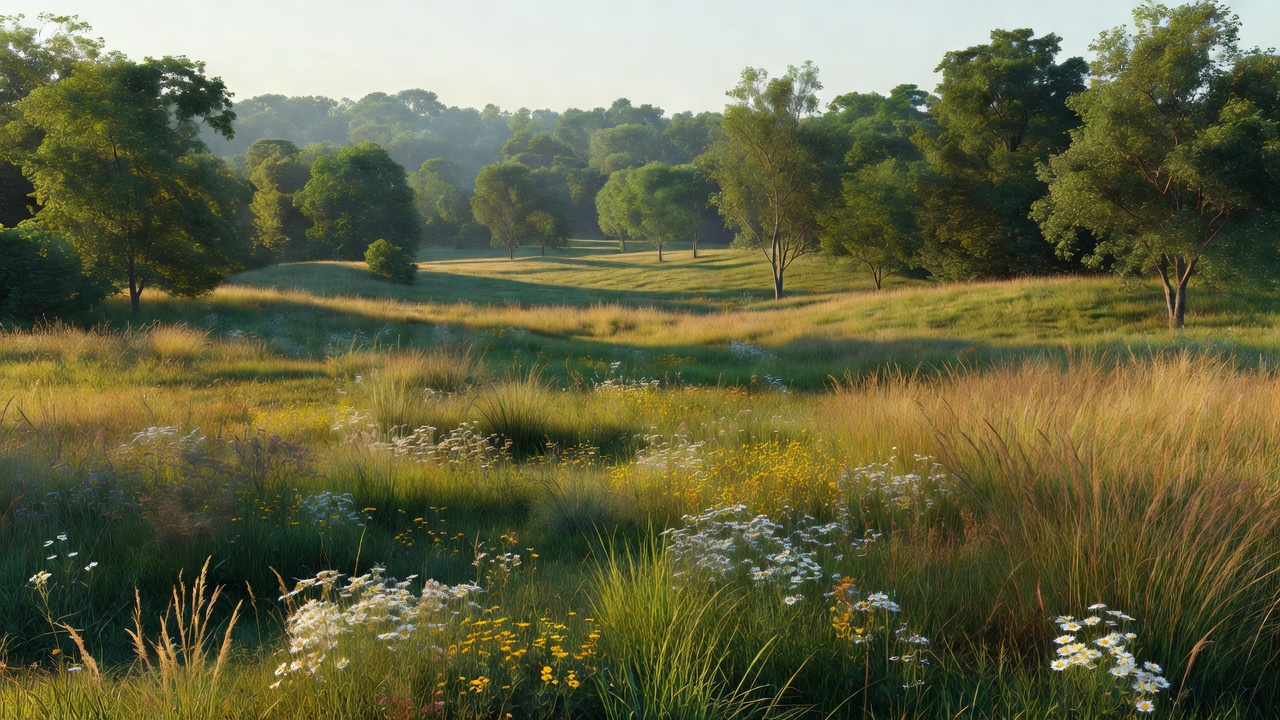
A soundscape is an acoustic environment as experienced or understood in context. That includes your attention, not just the sounds physically present. A lawn mower may dominate one visit; on another, you might notice the soft hiss of leaves beneath it. Listening is not a neutral inventory. Where you stand, what you expect and what matters to you all shape the scene you hear.
Begin with distance, not a list
Choose a safe place where you can remain comfortably still. Listen first to the nearest layer: clothing moving, a foot on gravel, insects near a flower or water touching the edge of a container. Then let attention travel outward to shrubs, trees and neighbouring gardens. Finally, notice the horizon of sound: a road, aircraft, distant voices or wind moving through a larger stand of trees.
These layers are a useful exercise, not accurate distance measurements. Loudness is affected by the source, obstacles, reflections and weather. A faint sound is not necessarily far away. If you cannot tell where something comes from, write “direction uncertain” rather than inventing a position. That small honesty keeps your observations useful when you return.
A three-layer listening sketch
An example scene, not a prediction of what your garden should sound like.
Notice the spaces between events
Some sounds arrive as events: a twig snaps, a bird calls, a door closes. Others form a relatively continuous bed, such as rain or distant traffic. Listen to how these interact. Does a passing vehicle hide a quiet call? Does the garden seem to open up when it has gone? Does an apparently steady hum rise and fall when you pay closer attention?
A short sound map can help. Mark yourself at the centre of a page, then use loose symbols for directions and repeated sounds. Add a few words about texture: grainy, pulsing, bright, muffled. There is no need to draw a beautiful map. Its value is in showing what caught your attention and what changed during a particular visit.
Give ordinary human sounds a place
A garden is rarely separate from daily life. Bicycles, conversations and household activity belong to its wider setting. You do not have to like every sound to observe it clearly. Record your response separately from your description: “low engine rumble” describes an event; “distracting” describes your experience. Both can matter, but they answer different questions.
The acoustic-ecology vocabulary associated with R. Murray Schafer and the World Soundscape Project offers ways to think about a place’s recurring sounds. Pauline Oliveros’s Deep Listening practice also encourages sustained attention. These are invitations to explore, not rules requiring a supposedly pure or entirely natural environment.
“After the van passed, I could hear the leaves again.”
Return under different skies
Compare the same location at another time rather than searching immediately for somewhere more impressive. Note the time, approximate weather and your listening position. Rain introduces impacts on roofs, leaves and soil; wind can both make sound and mask it. Seasonal changes alter vegetation, insect activity and which birds are present or vocal. One visit cannot stand for an entire habitat.
Dawn may be rich in birdsong during some seasons, but it is not a universal appointment. Species, latitude, weather and local activity all influence what you hear. Choose safe, accessible times that fit your life. A brief evening visit or a sheltered midday pause can reveal details that an early-morning recording misses.
Keep the practice comfortable
You do not need to close your eyes, wear headphones or stay outside beyond your comfort. Maintain awareness of paths, other people and approaching vehicles. If certain sounds are painful or overwhelming, shorten the session, move away or choose a quieter setting. Listening is not an endurance exercise and is not presented here as a medical treatment.
The National Park Service Natural Sounds resources and British Library sound collections provide wider context for environmental listening. The ISO 12913 series is a technical reference for soundscape work; a casual garden notebook is not a standardized survey. End your own session with one change you noticed. That is enough to make the next visit a little more attentive.