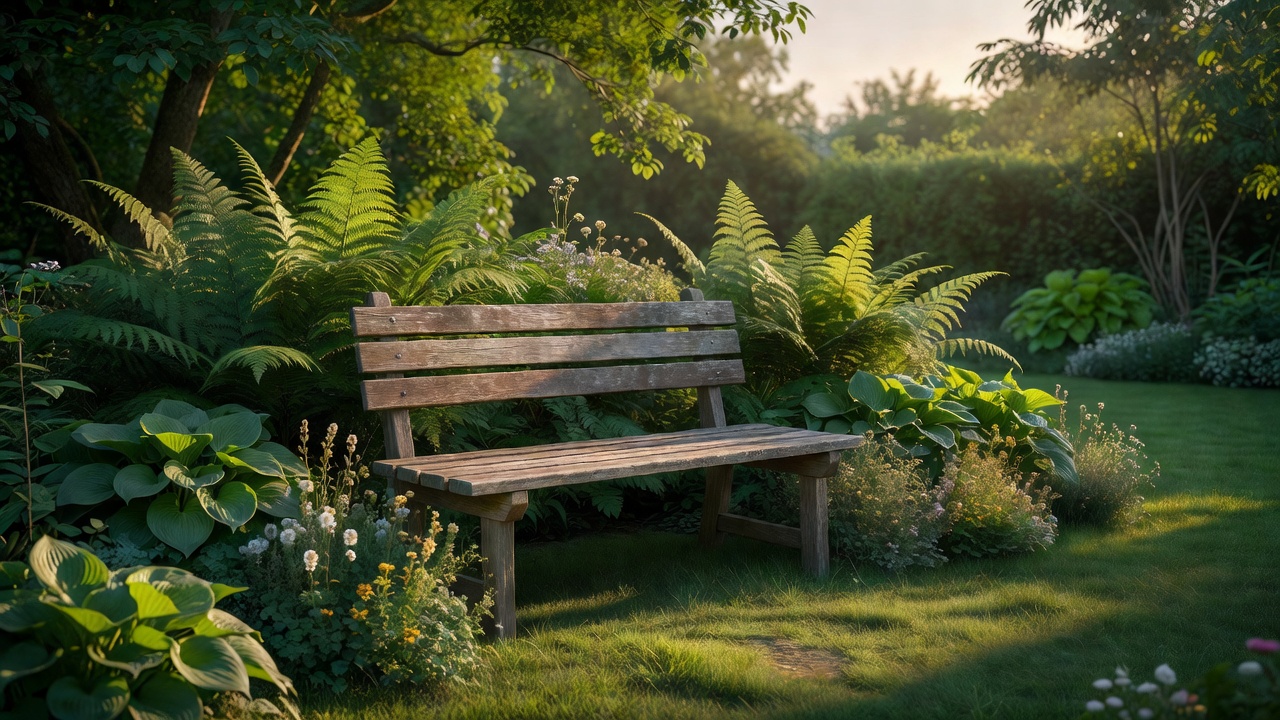
A listening garden is not a special category of property. It can be a shared courtyard, a modest back step or a chair beside a window looking onto planting. Its defining feature is repeated attention. Before buying anything, spend a few visits noticing where the wind feels gentlest, where machinery is most noticeable and where you can sit without blocking a route or overlooking a neighbour’s private space.
Choose a seat before choosing equipment
Comfort makes a short visit easier to repeat. A stable chair with appropriate support may matter more than a picturesque bench. Consider an accessible path, firm ground, shade, glare and a safe way back after dusk. Leave enough room for mobility aids or another person if needed. A listening spot should not require balancing on uneven ground or remaining still through discomfort.
Try moving a temporary seat before making permanent changes. A wall may provide shelter, but it can also reflect nearby noise. A hedge might reduce the feeling of exposure without substantially reducing traffic sound. Compare positions with your own ears. Modest changes in orientation can alter the balance of what you notice even when the overall noise level barely changes.
Support habitat, not a performance
Plant for the conditions you have: local climate, soil, water availability and available space. A mixture of suitable trees, shrubs, ground cover and seasonal flowers can offer different resources and shelter. Native plants can be valuable, but the right choices depend on your region and site. Check for invasive species and avoid planting something simply because it appears on a universal “bird garden” list.
The Royal Horticultural Society, The Wildlife Trusts, National Audubon Society and Xerces Society offer regionally relevant starting points. Local extension services and native-plant organizations can help narrow those choices further. Aim to support living things, not to guarantee a particular soundtrack. Birds and insects will use the space on their own terms.
A listening corner, in practical order
- Try an existing chair in more than one position.
- Check access, shade, footing and comfort.
- Observe wildlife routes before adding structures.
- Choose planting suited to your place.
- Keep one brief note from each visit.
Make maintenance a thoughtful sound
Tools are part of garden life, but their timing and duration affect everyone nearby. Group noisy tasks when practical, observe local restrictions and choose quieter methods where they suit the work. A broom or rake may be sufficient for a small area. Electric equipment can still be noisy, and a product label alone does not tell you how it will sound at a neighbour’s window.
Leave suitable habitat features where safe, such as some leaf litter or standing stems, rather than treating every untidy patch as a problem. Before trimming a hedge or clearing vegetation, check for active nests and follow local protection rules. Do not assume that one calendar date makes all work safe; nesting activity varies with species, climate and conditions.
Be realistic about barriers and water
A dense planting strip can improve privacy and the feel of a space, but a thin hedge is not a reliable acoustic barrier. Effective noise control depends on the source, geometry, barrier construction and gaps. Major works may need professional advice and permission. Avoid expensive promises of complete quiet, especially beside roads or other strong noise sources.
A small water feature adds sound rather than removing it. Some people enjoy that texture; others find it masks the details they came to hear. Consider water use, pump noise, electricity safety and maintenance. Any water provided for wildlife should be kept appropriately clean and safely accessible, with drowning risks considered. It is entirely reasonable to choose no water feature at all.
“The road was still there. From this chair, the leaves were there too.”
Keep the evening spacious
Use outdoor lighting only where needed and avoid directing it into vegetation or neighbouring homes. Do not add loudspeakers playing birdsong in an attempt to make a space feel natural. Recorded calls can confuse a listening session and may disturb wildlife. The garden does not need a soundtrack supplied on its behalf.
Return briefly and without demanding a special event. Notice a changed breeze, an absence, a familiar phrase or the ordinary sound of someone arriving home. If you have no outdoor space, a permitted public garden can serve the same practice; check opening hours and local rules. A quieter experience is a possibility, not a health promise or a requirement to enjoy every sound.